





Early-bird price: $39 $49 · ends Wednesday, Sep 30 at 11:59 PM ETends Wed, Sep 30 ·  
ISCP International Symposium on Clinical Psychiatry The Psychiatry Letter
Oct 29 · Live online Get access

Live online · October 29, 2026

1st International Symposium on Clinical Psychiatry

Dr. Nassir Ghaemi and an international panel of psychiatrists on the treatments that work best and get prescribed least: lithium, clozapine, and ECT, and the diagnosis that decides between them.

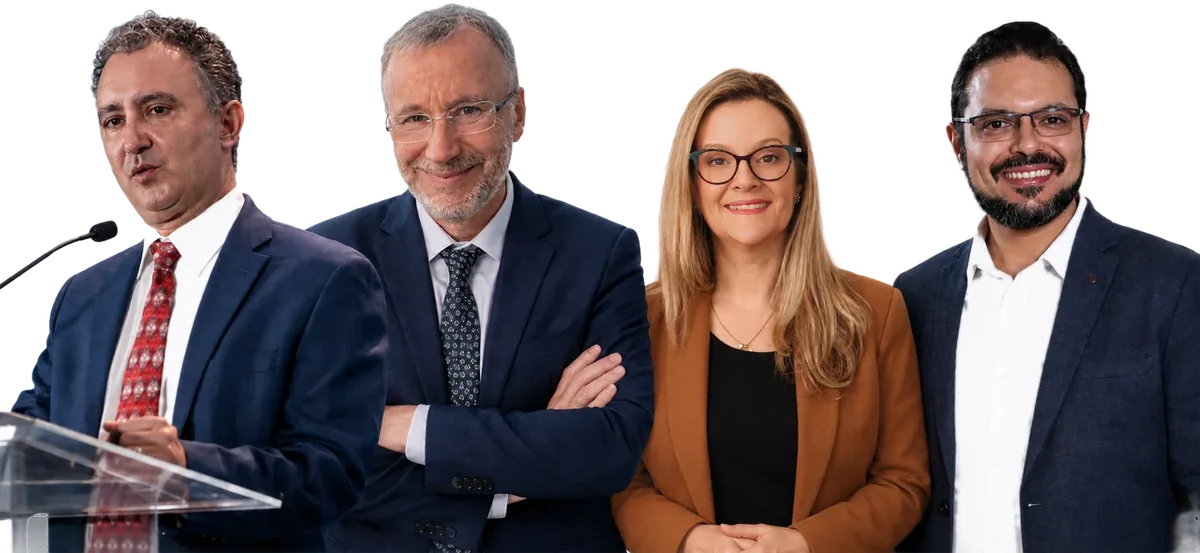
Nassir Ghaemi, Pedro do Prado Lima, Márcia Kauer-Sant'Anna and Elias Ajub

Nassir Ghaemi·Pedro do Prado Lima·Márcia Kauer-Sant'Anna·Elias Ajub

Live online

Thursday, Oct 29 · 6–10 PM ET. Join from anywhere.

English subtitles

For every participant, throughout the event.

Full recordings

Every registrant keeps the recordings.

For psychiatrists, psychiatric nurse practitioners, and residents who prescribe.

Get online access · $39$49 Early-bird price through Sep 30 · then $49
60-day money-back guarantee
Presented by
The Psychiatry Letter Instituto MedExperts

Your host

An evening led by Dr. Nassir Ghaemi

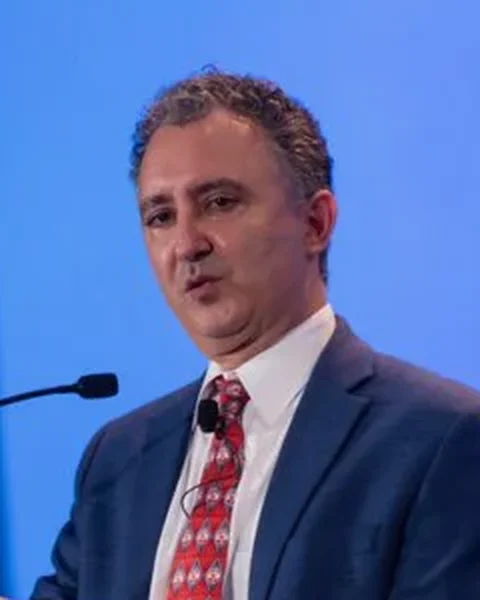
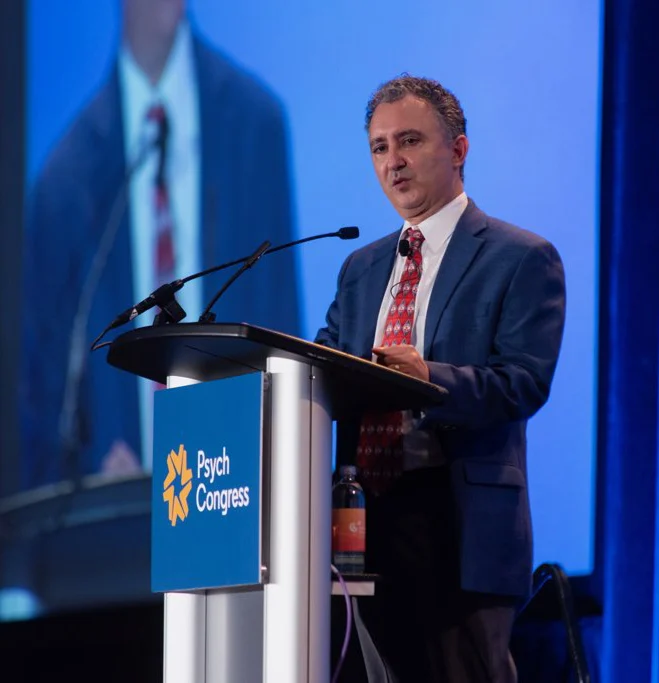
Dr. Nassir Ghaemi speaking at a psychiatry congress
Nassir Ghaemi, MD, MPHLecturer, Harvard Medical School

For decades, Dr. Ghaemi has argued that psychiatry's most effective treatments are also its most neglected, and that the neglect usually begins with the diagnosis.

On October 29 he brings that argument to an international table, alongside clinicians who work with lithium, clozapine, and ECT in daily practice.

  • Lecturer at Harvard Medical School
  • Former Professor of Psychiatry at Tufts Medical Center (Boston), where he directed the Mood Disorders Program
  • Author of the textbook “Clinical Psychopharmacology: Principles and Practice”
  • Author of the New York Times bestseller “A First-Rate Madness”
  • More than 300 scientific articles on bipolar disorder, depression, and psychopharmacology

At the symposiumThe lithium session and the closing conversation on diagnosis.

Where Dr. Ghaemi has trained, taught, and led research

Harvard University Massachusetts General Hospital Tufts University Novartis

Why this symposium

Psychiatry's most effective treatments.
And its least prescribed.

The most comfortable protocol is not always the most effective one. Lithium, clozapine, and ECT have decades of evidence behind them, yet they stay at the margins of everyday practice, held back by inherited fears, training gaps, and logistics. This evening is about what the evidence actually supports, how it changes the diagnosis, and how to bring these treatments back into your practice.

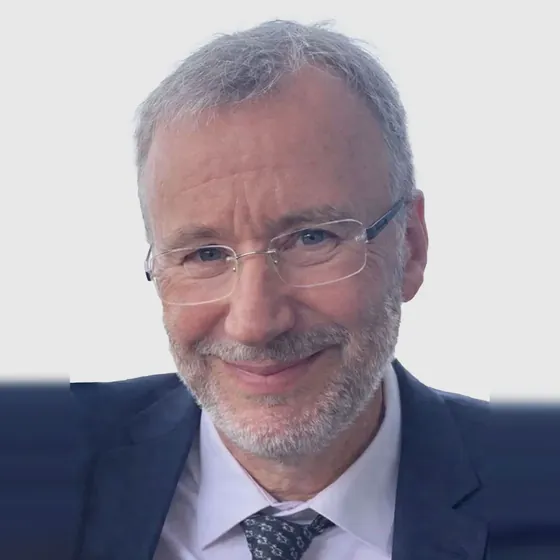
Dr. Pedro do Prado Lima

Dr. Pedro do Prado Lima

Opens the evening and moderates the panel

Opening

Highly effective, rarely prescribed

Why three of psychiatry's highest-impact treatments, lithium, clozapine, and ECT, remain at the margins of daily practice.

Dr. Prado Lima trained in psychiatry at CMME, Sainte-Anne Hospital, in Paris, and holds a PhD in biochemistry. He has built his career around treatment-resistant patients, those for whom the guideline treatments fail, and has written on how the evidence behind those guidelines gets made.

“The ultimate question here is, are we using evidence-based medicine or patent-based medicine?”

Pedro do Prado Lima, on the shift from lithium to divalproex · CNS Spectrums, 2017
  • Frames the evening's question: why treatments with decades of evidence stay at the margins of practice
  • A clinician-researcher's lens, from decades with patients for whom standard treatments fail
62% → 26%of US psychiatrist visits for bipolar disorder that included a mood stabilizer, 1997–2000 vs. 2013–2016, while antipsychotic use rose from 12% to 51%Rhee et al. · Am J Psychiatry 2020
15 yearsorganizing the World Congress on Brain, Behavior and Emotions, which he co-foundedBrain Congress, Brazil
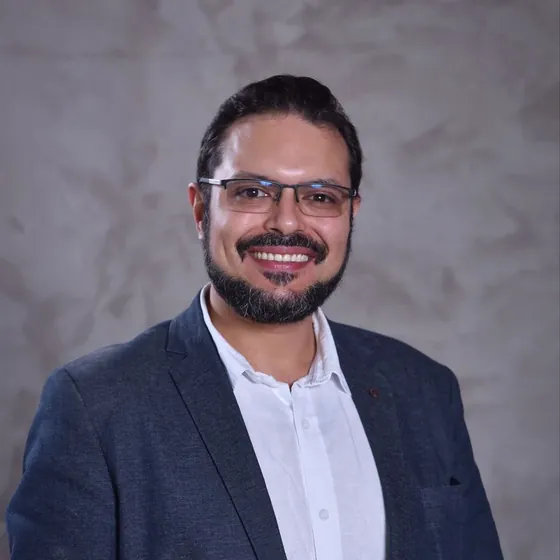
Dr. Elias Ajub

Dr. Elias Ajub

Psychiatrist · neuromodulation

Interventional psychiatry

When nothing else works: ECT and the foundations of interventional psychiatry

TMS, esketamine, and ECT now form a field of their own. ECT is the oldest of the three, the most stigmatized, and still among the most effective treatments for severe depression.

  • Demystifying ECT: what a modern course actually involves, from brief general anesthesia and a muscle relaxant to two or three sessions a week
  • Indication and referral: which patients to send, and when
  • What to tell the patient and family when you propose it, including an honest account of memory effects
  • How ECT, TMS, and esketamine fit together when first-line treatments fail
  • Running an ECT service safely and well, from a psychiatrist who trains ECT teams
1.4×the remission rate of ketamine: ECT outperformed ketamine in a meta-analysis of randomized trials in major depressionJAMA Psychiatry 2023
< 1%of Americans with major depression receive ECTPsychiatric Services 2021
30%lower all-cause mortality in patients treated with ECT than in similar patients who did not receive it, across 17 studies and 1.18 million peopleBMJ Mental Health 2025

First used in Rome in 1938 by Ugo Cerletti and Lucio Bini, ECT has outlived its reputation for one reason: for the most severely ill patients, few treatments work as well or as quickly.

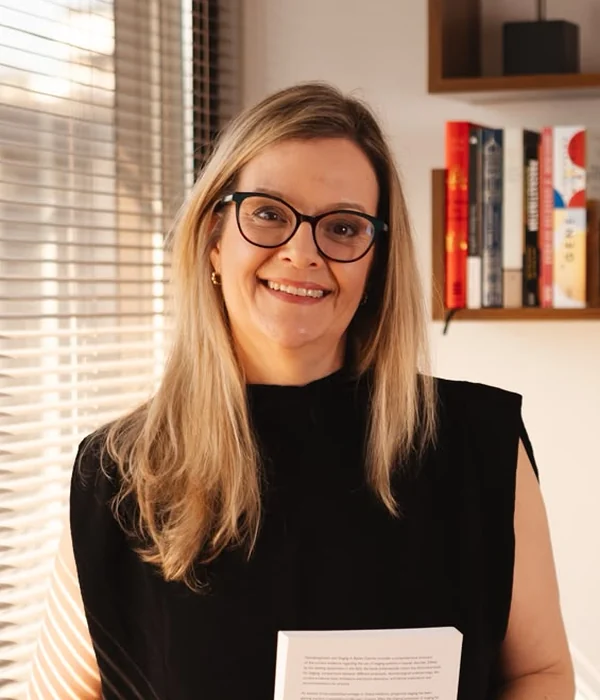
Dr. Márcia Kauer-Sant'Anna

Dr. Márcia Kauer-Sant'Anna

Professor of Psychiatry · bipolar disorder

Clozapine

Demystifying clozapine

The reference drug for treatment-resistant illness, and one of the most underused. Dr. Kauer-Sant'Anna uses it well beyond schizophrenia.

“We could use much more clozapine for bipolar patients than we use right now.”

Márcia Kauer-Sant'Anna, on The Psychiatry Letter podcast, June 2026
  • Beyond schizophrenia: the bipolar patients most likely to respond, with chronic manic or mixed features, irritability, or impulsivity, with or without psychosis
  • Lower doses: in her bipolar clinic, often less than half the usual schizophrenia dose, which changes tolerability and who can benefit
  • The monitoring barriers that keep prescribers away, and what the neutropenia data actually show
23%lower risk of psychiatric hospitalization on clozapine than on other antipsychotics in bipolar disorder, yet only about 0.5% of these patients received itFinnish and Swedish registries · Lancet Psychiatry 2025
2025The FDA removed the clozapine REMS. ANC monitoring per the prescribing information still applies.FDA
Dr. Nassir Ghaemi

Dr. Nassir Ghaemi

Harvard Medical School

Lithium

Lithium: the safest and most effective of psychotropics

The most effective treatment in mood disorders, and one of the least prescribed.

“If you can't or won't use lithium, you should get out of the business of treating bipolar illness.”

Frederick Goodwin, former NIMH director and Dr. Ghaemi's mentor. Dr. Ghaemi goes further: if you can't or won't use lithium, you can't treat psychiatric illness well in general.
  • Dosing to clinical effect: what the serum level really tells you, and what it doesn't
  • Lithium in depression, not just mania: what unbiased studies show
  • The fears that keep prescribers away, toxicity and kidneys, and what the evidence answers
Dr. Pedro do Prado Lima
Dr. Nassir Ghaemi

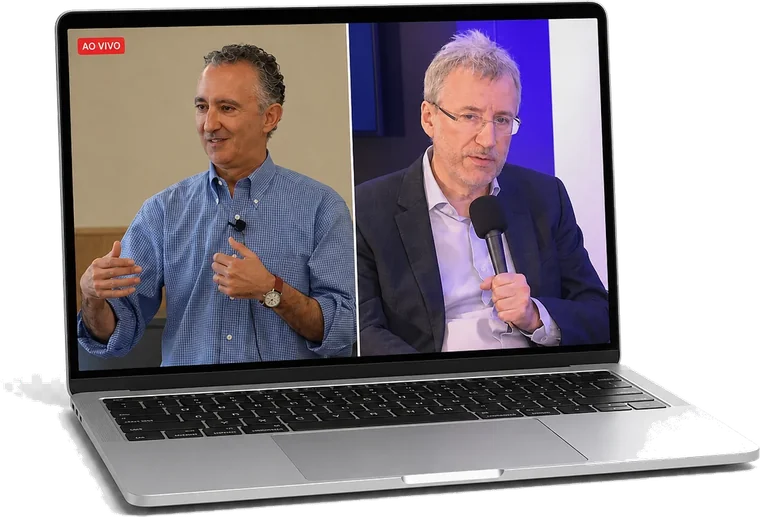
Dr. Pedro & Dr. Nassir

Face to face

Closing

A conversation about diagnosis in psychiatry

Two clinicians on what comes before the prescription: recognizing the right illness.

“Treat the disease, not just the symptoms.”

The Hippocratic principle Dr. Ghaemi has defended for decades
  • The error that delays everything: bipolar depression treated for years as unipolar
  • When the diagnosis changes, the whole treatment changes, from drug choice to prognosis

Included with every registration

Can't watch live? You still get everything.

Every registrant receives the full recordings, and English subtitles are provided for every participant.

Full recordings

The complete scientific program, recorded and available in the Psychiatry Letter Member Area after the event. Watch on your own schedule.

English subtitles

Provided for every participant. Several speakers present in Portuguese; English subtitles run throughout the event.

Live from anywhere

Streamed live online on Thursday, October 29, 6–10 PM ET, on any device.

Confirmed speakers

Who's at the table

Nassir Ghaemi

Nassir Ghaemi

Harvard Medical School · formerly Tufts Medical Center

  • Author of “Clinical Psychopharmacology: Principles and Practice”
  • NYT bestseller “A First-Rate Madness”
  • Bipolar disorder expert · 300+ articles
Pedro do Prado Lima

Pedro do Prado Lima

Psychiatrist · PhD in Biochemistry (UFRGS)

  • Psychiatry training at CMME, Sainte-Anne Hospital (Paris)
  • Psychopharmacology · treatment-resistant mood disorders
  • Co-founder, World Congress on Brain, Behavior and Emotions
Márcia Kauer-Sant'Anna

Márcia Kauer-Sant'Anna

Full Professor of Psychiatry · UFRGS

  • Coordinates the bipolar disorder outpatient clinic at Hospital de Clínicas de Porto Alegre
  • Trained at the University of British Columbia's Mood Disorders Centre
  • Research on bipolar staging and biomarkers
Elias Ajub

Elias Ajub

Psychiatrist · Neuromodulation (USP/NAPEN)

  • Vice President, Hospital 22 de Outubro
  • President of CEPAB (Center for Psychiatric Studies)
  • Specialist in addiction medicine (UNIFESP)

The evening

How the symposium unfolds

6:00 PMET

Opening

Highly effective, rarely prescribed

Dr. Pedro do Prado Lima opens the evening and moderates the program.

Dr. Pedro do Prado Lima
Part 1

International round table · ECT

ECT and interventional psychiatry

When nothing else works: indication, referral, and what a modern course of ECT actually involves.

Dr. Elias Ajub
Part 2

International round table · Clozapine

Demystifying clozapine

Clozapine beyond schizophrenia, at lower doses, and the monitoring barriers that keep prescribers away.

Dr. Márcia Kauer-Sant'Anna
Part 3

International round table · Lithium

Lithium: the safest and most effective of psychotropics

What the unbiased studies show, and the fears that keep clinicians from prescribing it.

Dr. Nassir Ghaemi
Closing

Closing conversation

A conversation about diagnosis in psychiatry

Two clinicians, face to face, on what comes before the prescription. Followed by a special book launch.

Dr. Pedro do Prado Lima & Dr. Nassir Ghaemi
10:00 PMET

End of the live program

Recordings with English subtitles follow in the Member Area.

Online access

Join the symposium live online

Live stream + recordings

1st International Symposium on Clinical Psychiatry

Thursday, October 29, 2026 · 6–10 PM ET

$3949

Regular $49USD

Early-bird price ends Wednesday, Sep 30, 11:59 PM ET

  • Live access to the complete scientific program
  • English subtitles for every participant
  • Full recordings, yours to keep after the event
  • International round table and book launch
Get online access

60-day money-back guarantee

Joining instructions are emailed to you before the event.

A note on language: several speakers present in Portuguese. English subtitles run throughout the live event.

Frequently asked questions

How does online access work?

Your registration includes the live stream of the complete scientific program on Thursday, October 29, 2026, from 6 to 10 PM Eastern Time. Joining instructions are sent by email before the event.

Will there be English subtitles?

Yes, for every participant. Several speakers present in Portuguese, and English subtitles run throughout the event.

Are the recordings included?

Yes. Every registrant receives the recordings of the complete program in the Psychiatry Letter Member Area and keeps access after the live event.

I can't attend live. Should I still register?

Yes. The recordings are included with every registration, so you can watch the full program on your own schedule.

Who is the symposium for?

Psychiatrists, psychiatric nurse practitioners, residents, and other clinicians who prescribe or manage psychiatric medication and want the evidence behind lithium, clozapine, and ECT.

Where does the panel take place?

The symposium is broadcast live online, so you can join from anywhere. The panel convenes in São Paulo, Brazil, during the week of the Brazilian Congress of Psychiatry.

Will the price go up?

Yes. The early-bird price of $39 is available through Wednesday, September 30, 2026, at 11:59 PM Eastern Time. After that, online access is $49.

What if it isn't right for me?

Your registration is covered by a 60-day money-back guarantee. Email info@psychiatryletter.com within 60 days of purchase and we will refund you in full.

I have another question. Who should I contact?

Email our team at info@psychiatryletter.com. We reply quickly.

Sources for figures on this page
  1. Rhee TG, Olfson M, Nierenberg AA, Wilkinson ST. 20-year trends in the pharmacologic treatment of bipolar disorder by psychiatrists in outpatient care settings. Am J Psychiatry. 2020. PubMed 32312111
  2. Menon V, Varadharajan N, Faheem A, Andrade C. Ketamine vs electroconvulsive therapy for major depressive episode: a systematic review and meta-analysis. JAMA Psychiatry. 2023. PubMed 37043224
  3. Wilkinson ST, et al. Barriers to the implementation of ECT: results from a nationwide survey of ECT practitioners. Psychiatr Serv. 2021. PubMed 33971727
  4. Rhee TG, et al. Longitudinal associations of electroconvulsive therapy with all-cause mortality and suicide deaths in severe unipolar or bipolar depression: a systematic review and meta-analysis. BMJ Ment Health. 2025. PubMed 41407487
  5. Luykx JJ, et al. Transdiagnostic effectiveness and safety of clozapine: nationwide and meta-analytic comparisons with other antipsychotics. Lancet Psychiatry. 2025. PubMed 41192460
  6. U.S. Food and Drug Administration. FDA removes risk evaluation and mitigation strategy (REMS) program for the antipsychotic drug clozapine. 2025. fda.gov

October 29. Live online. Recordings for every registrant.

One evening with Dr. Nassir Ghaemi and an international panel, with English subtitles for every participant.

Get online access