FROM $97 FOR ONLY $17 - SPECIAL PRICE FOR A LIMITED TIME
Diagnosing depression beyond the DSM
Uncover the Truth About Depression with Dr. Nassir Ghaemi.
DSM is 95.2% false. Learn evidence-based approaches that will improve your clinical practice.
"A must-read for any psychiatric prescriber." – Jennifer Weatherford
We Never Share Your Information With Anyone
CONTENT TRUSTED BY:
"An exceptionally concise and coherent handbook that leaves no room for misinterpretation."
See What Others Are Saying About Dr. Ghaemi's New eBook
"Dr. Ghaemi is brilliant and 100% accurate with his teachings. If you want to be a good provider, follow his recommendations."
Jennifer Weatherford
Psychiatrist
"Dr. Ghaemi’s philosophy embraces the 'humanistic psychiatry' approach, challenging theoretical knowledge without valid clinical evidence."
Ahmed Elaghoury
Psychiatrist
"An exceptionally concise and coherent handbook that leaves no room for misinterpretation."
Pipps
Psychiatrist
"You will never treat depression the same way"
Learn why this matters.
The bipolar/unipolar distinction, now calcified in DSM-III through 5, has not been supported by further research in mood disorders."
Dear Colleague,
For decades, the DSM has been considered the "Bible" of psychiatric diagnosis. However, its limitations are becoming increasingly evident.
Are you noticing that standard treatments aren't yielding the results you hoped for?
In "The Beyond DSM Depression Diagnosis," I delve into: - The Flaws of the DSM: Understand why up to 95% of DSM diagnoses lack scientific validity. - Evidence-Based Practices: Learn how to apply research-driven criteria to your diagnostic process. - Improved Patient Care: Discover how moving beyond the DSM can lead to better outcomes for your patients.
What You'll Learn
1. The truth about diagnosing depression: How DSM evolved and why most DSM diagnoses lack scientific validity.
2. Practical Application: How to implement research-driven diagnoses in your daily practice, the four types of depression and detailed descriptions and clinical indicators to help you distinguish between them.
3. Evidence-Based Alternatives: Introduction to the Clinical Research Diagnostic Criteria (CRDC) and how to implement it in your practice.
4. Improving Outcomes: Main medications for the treatment of depression
WARNING!
This ebook is NOT about surface-level symptoms.
It dives deep into the root causes, course, and overlooked diagnostic nuances.
This ebook is NOT for those who believe in rigid diagnostic boxes.
It boldly critiques decades of psychiatric consensus and offers alternative models.
This ebook is NOT focused on antidepressants as the solution.
Instead, it challenges their use in bipolar disorders and explores their potential harms.
Who will benefit
Psychiatrists and Psychologists
Mental Health Nurses and Clinicians
Researchers and Academics in Psychiatry
Invest in Your Professional Growth
For less than the cost of a single session, gain the clarity and tools to diagnose depression accurately.
If you don't find value in the insights and strategies provided, simply reach out within 7 days for a full refund — no questions asked.
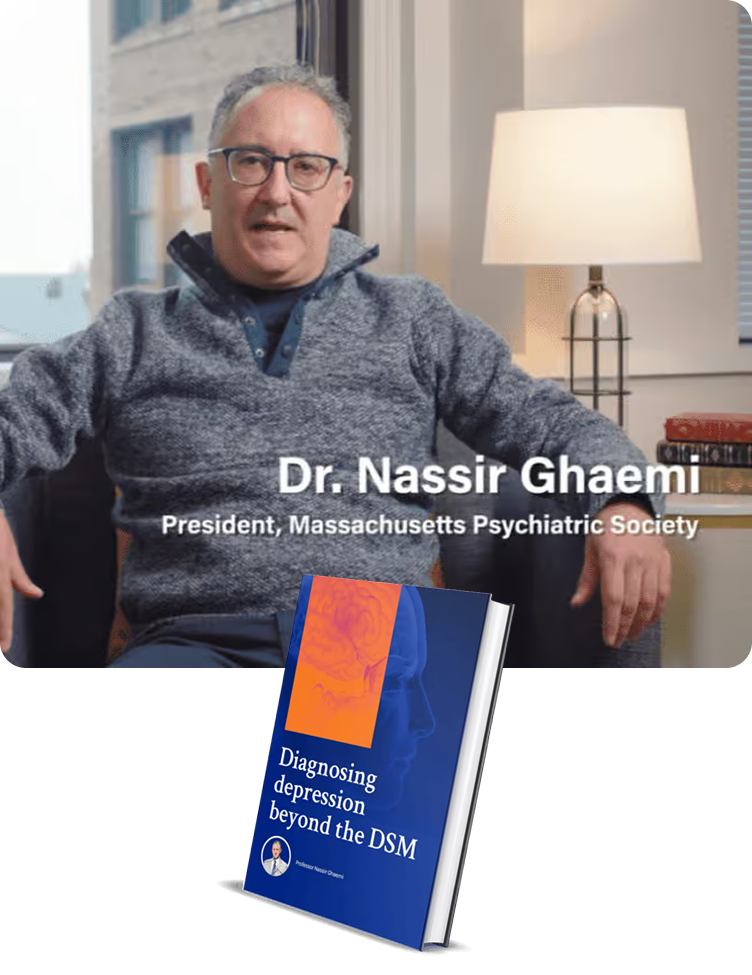
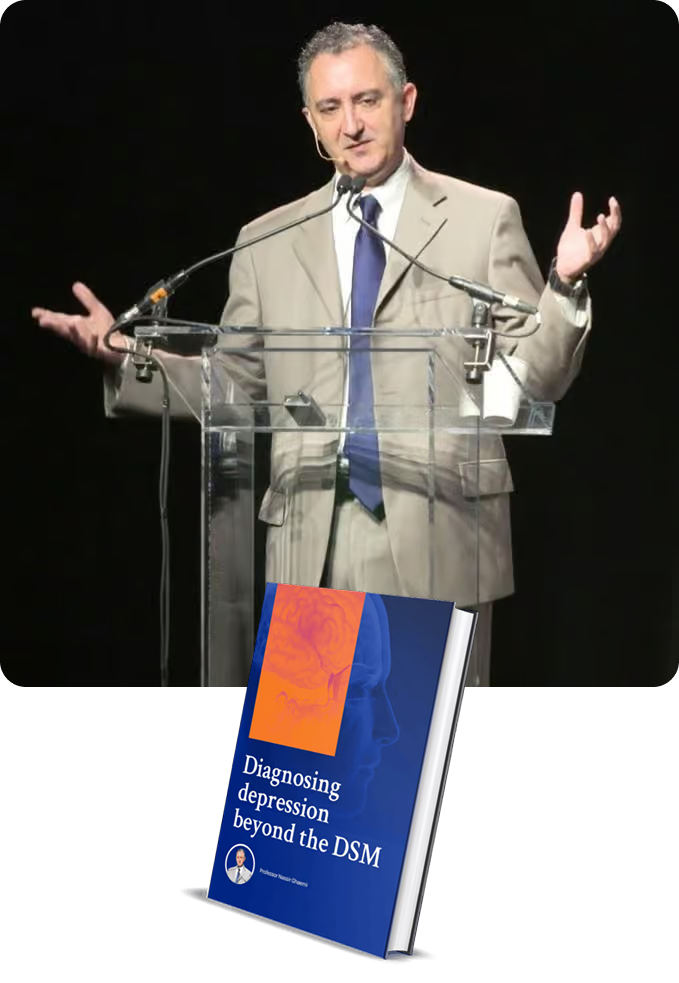
Nassir Ghaemi MD MPH is a psychiatrist and researcher specializing in depression and bipolar illness. He is Professor of Psychiatry at Tufts Medical Center in Boston, Clinical Lecturer at Harvard Medical School, teaches at the Cambridge Health Alliance.
Formerly employed at Novartis Institutes of Biomedical Research in Cambridge MA, where he lead clinical psychiatry research in early drug discovery. He is author of numerous books including the bestselling A First-Rate Madness: Uncovering the Links between Mental Illness and Leadership, and, most recently, Clinical Psychopharmacology,
He runs a clinical education website, The Psychiatry Letter with hundreds of readers over the world. He has published over 300 scientific articles or book chapters, and serves on the editorial board of numerous journals.
Here's A Few Secrets You'll Discover In The eBook
CHAPTER 1:
Psychopathology
of depression
▪️Core Features of Depression and Mania. Explores psychomotor changes as key symptoms, highlighting how mood is less central to diagnosis than commonly believed.
▪️Evolution of Mood Disorder Diagnoses. Compares Kraepelin’s broad manic-depressive illness (MDI) concept with DSM’s narrower bipolar and unipolar definitions.
▪️Understanding Mixed States. Discusses the prevalence of mixed states, where depressive and manic symptoms overlap, challenging DSM classifications.
CHAPTER 2:
Neurotic Depression
▪️Defining Neurotic Depression. Examines neurotic depression as chronic, mild-to-moderate, and distinct from episodic mood disorders like MDI.
▪️Historical Perspectives on Neurosis and Psychosis. Explores how neurotic and psychotic depression were defined differently in Freudian and European traditions.
▪️Impact of DSM on Neurotic Depression. Explains how DSM-III eliminated neurotic depression, merging it into broader categories like MDD and anxiety disorders.
CHAPTER 3:
A Post-DSM System
▪️Limitations of DSM Diagnoses. Critiques the DSM's rigid separation of bipolar and unipolar disorders, highlighting inconsistencies in research.
▪️Manic-Depressive Illness as a Spectrum. Proposes a spectrum model for mood disorders, blending bipolar, unipolar, and mixed features.
▪️Integrating Mood Temperaments. Discusses the role of temperaments like hyperthymia and cyclothymia in understanding mood disorders beyond DSM categories.
CHAPTER 4:
Differential Diagnosis
▪️Differential Diagnosis of Mood Disorders. Explains how to distinguish bipolar and unipolar depression using course, genetics, and symptoms.
▪️Overlapping Symptoms and Misdiagnoses. Discusses challenges in differentiating mood disorders from personality disorders, schizophrenia, and ADD.
▪️Diagnostic Hierarchy vs. Comorbidity. Advocates for a hierarchy-based approach to diagnosis, prioritizing mood disorders over overlapping conditions.
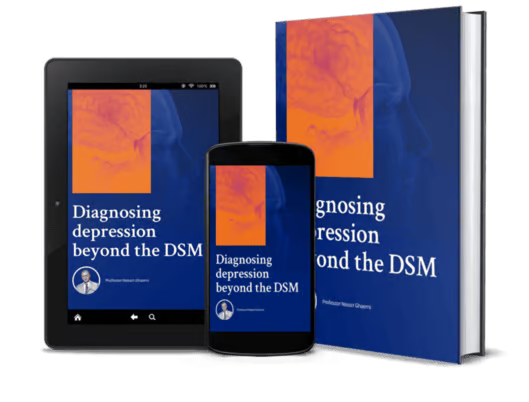
Diagnosing Depression Beyond the DSM is provided in digital format only.
This format allows you to start reading immediately, without waiting for physical delivery. It’s accessible on any device, so you can engage with the content wherever and whenever it suits you.
Additionally, the digital version ensures you have access to the latest updates and provides convenient features like search, highlighting, and easy navigation, enhancing your learning experience.